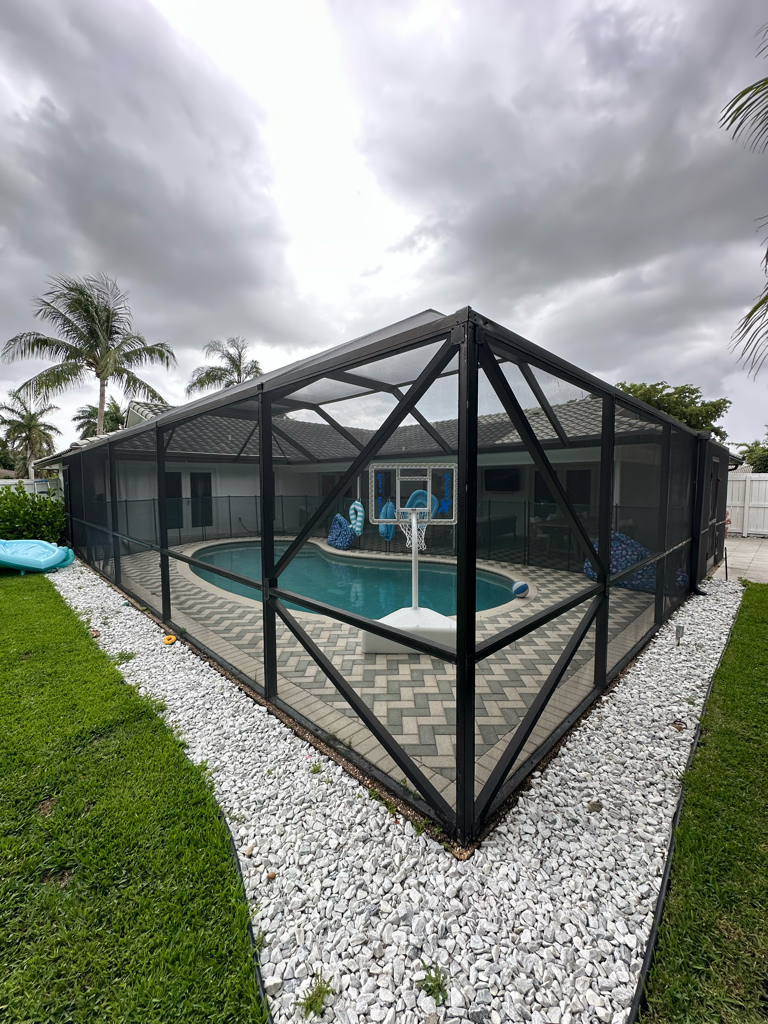
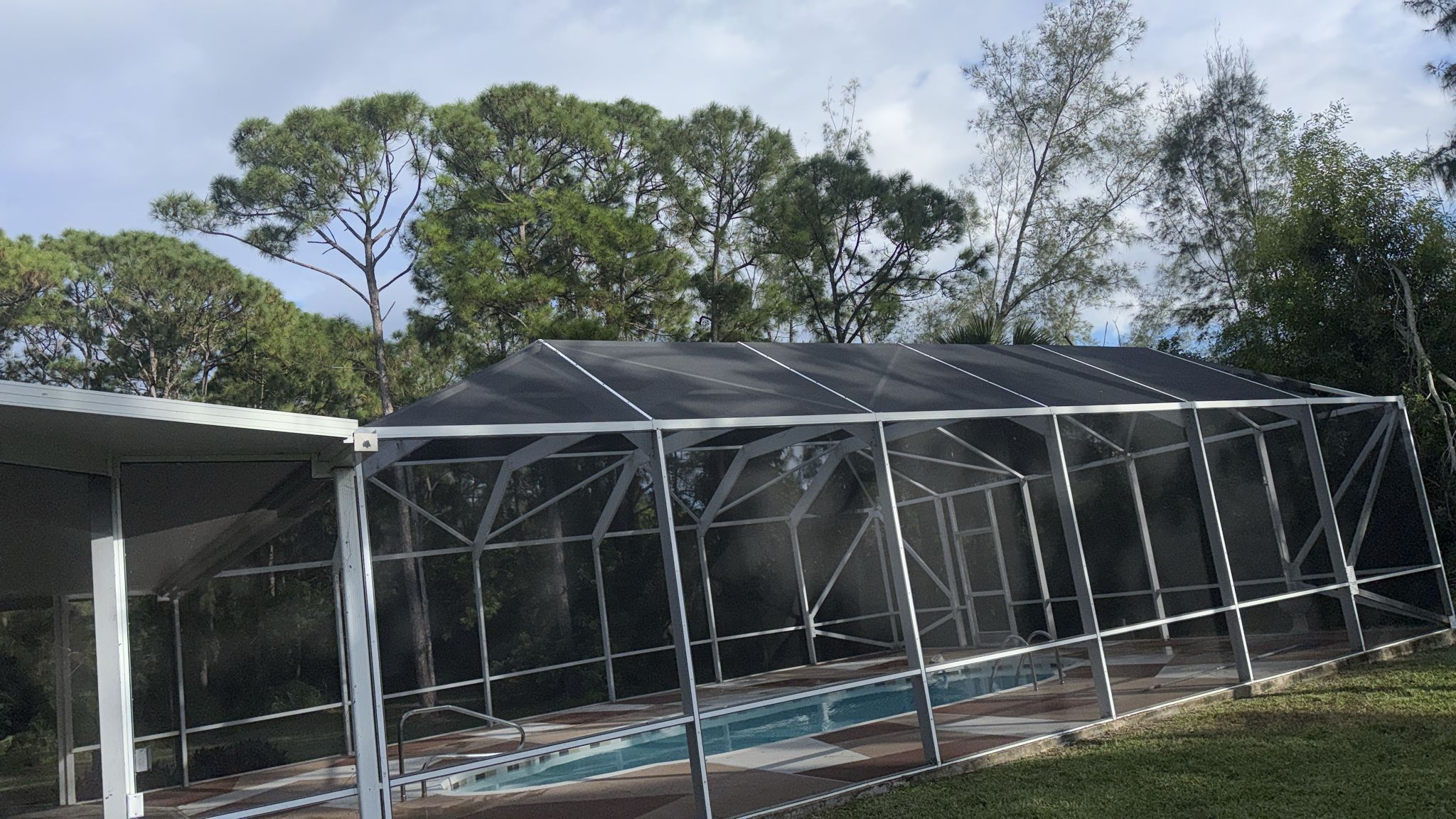
What Pool Screen Repair Actually Covers
Pool screen repair is not just patching a small hole with a kit from the hardware store. A professional repair service handles the full range of damage that South Florida weather and daily use cause to pool enclosures.
- Hole and tear repair: Small punctures and tears are re-screened in-place using matching fiberglass or aluminum mesh, keeping tension even across the panel.
- Full panel re-screening: When a panel has multiple tears, sun degradation, or significant sagging, the entire panel is replaced with fresh screen material.
- Frame straightening and replacement: Aluminum framing bent from storm impact or ladder pressure can often be straightened; frames with cracks or severe corrosion are replaced entirely.
- Door hardware and frame repair: Pool cage doors take constant abuse — we repair and replace hinges, tension springs, frame corners, and latches that have failed.
Common Causes of Pool Screen Damage in South Florida
Florida's climate is hard on screen enclosures. Understanding what causes the damage helps you catch it early.
- Hurricane and tropical storm debris: Wind-driven branches, palm fronds, and airborne debris are the most common cause of sudden screen failure during storm season (June–November).
- UV degradation: South Florida averages over 260 sunny days per year. Prolonged UV exposure breaks down fiberglass mesh, making it brittle and prone to tearing under light pressure.
- Salt air and oxidation: Homes near the coast in Boca Raton, Pompano Beach, and Deerfield Beach see accelerated aluminum frame oxidation — the chalky white buildup that weakens joints over time.
- Wildlife impact: Birds, squirrels, and iguanas (especially in South Palm Beach County) routinely damage screen panels by perching, clawing, or forcing their way through.
Repair vs. Full Re-screen — How to Know Which You Need
Not every pool screen issue requires a full re-screen, but some damage makes repair the wrong call. Here is a practical way to assess it:
- Repair makes sense when the damage is limited to one or two small tears (under 6 inches), the frame is structurally sound, and the surrounding mesh is still in good condition.
- Full panel re-screen is the better choice when more than 30% of a panel is torn or sagging, the mesh has become brittle and pulls apart easily, or you are replacing multiple panels at once.
- Frame work comes first when the aluminum framing is bent, cracked, or severely oxidized — installing new screen on a damaged frame shortens the lifespan of the repair significantly.
In most cases, a same-day inspection tells you exactly which path is right. Repairs typically cost a fraction of a full re-screen, and a full re-screen costs considerably less than replacing the entire enclosure.
Professional Pool Screen Repair vs. DIY Patch Kits
Patch kits sold at hardware stores work for very small, temporary fixes — but they have real limitations in a Florida climate.
Store-bought patch adhesives break down under UV exposure and heat, typically failing within one to two seasons. The mesh tension on a patched section never matches the surrounding panels, which creates visible sagging. And if the underlying frame is the real problem, no patch addresses it.
Professional repair uses the same screen materials and aluminum extrusions used in original construction. The tension is set properly, the seams are splined cleanly, and the repair is built to last through multiple storm seasons — not just until the following summer.
Pool Screen Repair Service Areas — Broward & Palm Beach County
We provide pool screen repair throughout South Florida, serving both residential and commercial properties with same-week scheduling available for most jobs.
Broward County: Fort Lauderdale, Hollywood, Miramar, Pembroke Pines, Weston, Coral Springs, Pompano Beach, Deerfield Beach, Parkland, Coconut Creek, Plantation, Davie, Sunrise, Tamarac, Margate, Lauderhill
Palm Beach County: Boca Raton, Delray Beach, Boynton Beach, West Palm Beach, Lake Worth, Greenacres, Wellington, Loxahatchee, Palm Beach Gardens, Royal Palm Beach
Call us at (954) 621-4774 to schedule a free on-site assessment or to get a same-day quote over the phone for straightforward repairs.
Pool Screen Repair — Frequently Asked Questions
- How long does pool screen repair take?
- Most pool screen repairs — including single-panel re-screens and frame adjustments — take between 30 minutes and two hours on-site. Full enclosure re-screens for larger cages typically take one full day.
- Can you repair just one panel or do I need a full re-screen?
- Yes, individual panels can be replaced without touching the rest of the enclosure. If only one or two panels are damaged and the surrounding frame is solid, a partial repair is the most cost-effective approach. If the enclosure needs a full rebuild, our patio remodeling service covers complete pool cage and enclosure replacement.
- What screen material do you use for pool enclosures?
- We use fiberglass mesh for most standard pool screen repairs — it is flexible, UV-rated, and the industry standard for South Florida pool cages. Heavier-gauge or pet-resistant screen is also available on request.
- Do you repair aluminum pool screen frames?
- Yes. Frame straightening, corner fitting replacement, and full extrusion replacement are all part of our repair service. Damaged framing is the most common reason screen repairs fail prematurely, so we address it before installing new screen material. For sliding glass door track and frame issues on the same property, we also offer sliding door repair.