
Is Your Pool Screen Enclosure Ready for Hurricane Season? A South Florida Inspection Checklist (2026)
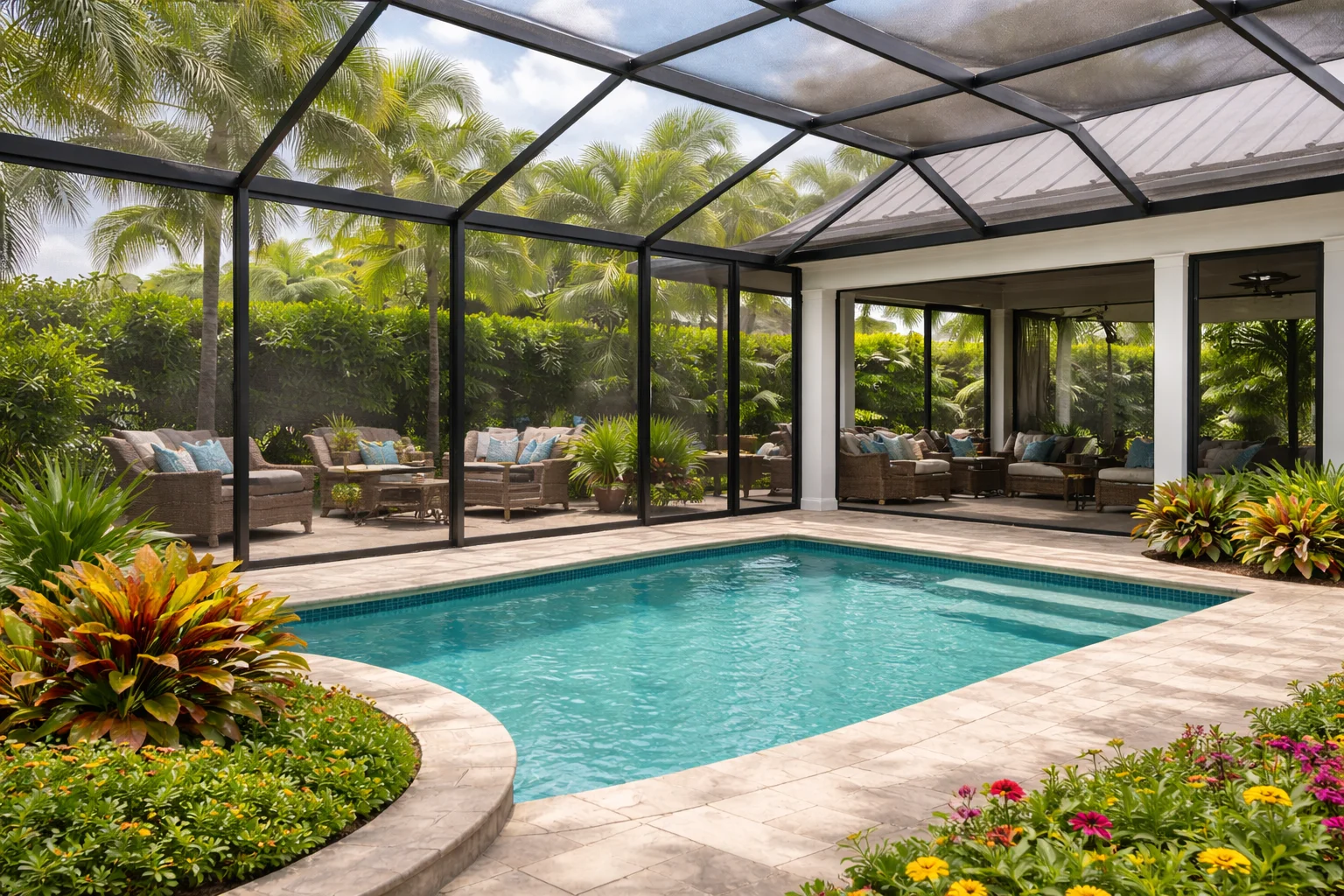
In Broward and Palm Beach County, a pool screen enclosure can look fine on a calm morning and show its weak spots during the first hard afternoon storm. Summer heat dries out spline, salt air attacks fasteners, and repeated gusts work loose connections that held firm last year. By August, when Atlantic activity usually begins to climb toward its August-through-October peak, small problems can turn into torn panels, swinging doors, or frame damage.
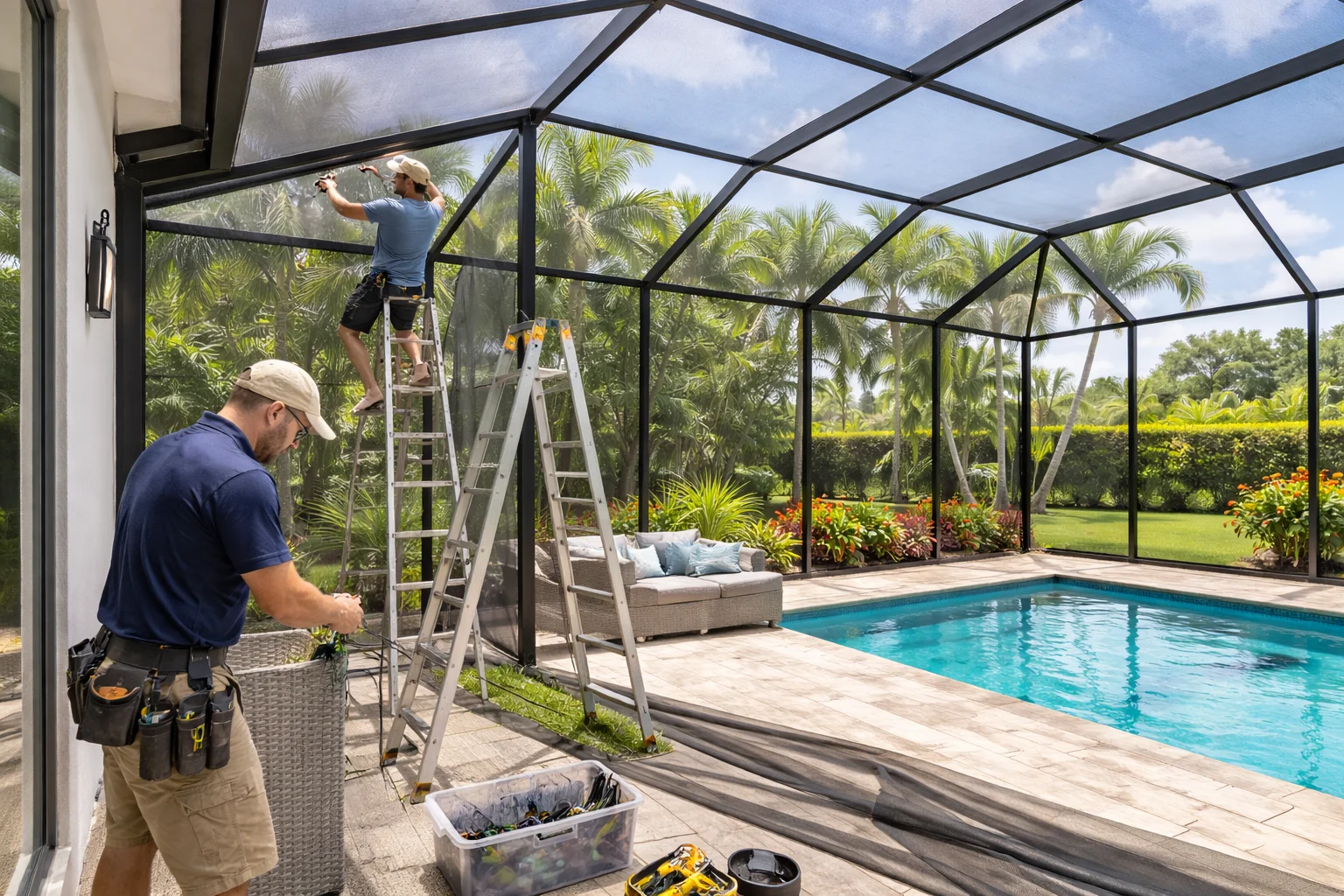
Our technicians see the same trouble points again and again. What our techs check first is not the prettiest part of the cage. We start at the connections: screen edges, anchor points, braces, doors, and the line where the enclosure meets the house and gutter. This homeowner checklist will help you spot warning signs while there is still time to schedule a controlled repair instead of an emergency call after a storm.
Why Pool Screen Enclosures Fail in South Florida Storms
A pool cage is a system. The aluminum frame, mesh, spline, anchors, cables, doors, and house attachment all share wind loads. Failure often starts when one worn part makes the next part work harder. Loose screen can flap and pull at the spline channel. A weak door closer can let the door slam. Corroded screws may hold during ordinary rain but give way under repeated gusts.
South Florida weather adds several stresses at once. Strong afternoon thunderstorms can arrive with little warning. Sun and heat make old fiberglass mesh brittle. Coastal moisture speeds up rust at steel fasteners. Leaves and water can load a super gutter. A tropical storm does not need a direct hit to expose years of wear.
7-Point DIY Pool Cage Inspection Checklist
Walk the enclosure in daylight on a dry, calm day. Stay on the deck. Do not climb the frame or place a ladder near the pool. Take photos of anything that looks loose, bent, split, or rusty so a contractor can review it.
1. Check Screen Tension
Look across each wall and roof panel from an angle. Healthy screen should sit flat and even. A little movement in a breeze is normal, but deep sagging, baggy corners, waves, or panels that slap the frame point to stretched mesh or failing spline. Pay close attention to large roof panels and panels beside doors, where movement is often easiest to see.
A patch may stop insects, but it does not restore tension. Several loose or brittle panels may call for full pool screen repair and rescreening.
2. Inspect the Spline Condition
Spline is the rubber cord pressed into the frame channel to hold the mesh. Check accessible lower panels for spline that is cracked, hard, shrunken, missing, or pulling out at the corners. Gaps often begin as a few inches and spread when wind gets behind the screen.
Do not press old spline back in with a screwdriver. That can cut the mesh or damage the channel. If the spline no longer grips, the panel should be reset with the correct size and material.
3. Look at Anchor Bolts and Tapcons
At the base of the enclosure, inspect the fasteners that connect the frame to the concrete deck or footings. They should sit tight and straight. Watch for missing heads, loose brackets, cracked concrete around an anchor, orange rust trails, or a visible gap between the base plate and deck.
Do not tighten structural anchors unless you know the enclosure design and fastener requirements. Spinning or badly corroded anchors need professional review. In Broward and Palm Beach County, simple mesh replacement is often treated as maintenance, while structural frame replacement or major changes may require a local permit. Rules vary by city, so confirm with the building department before structural work begins.
4. Check Cable Ties and Bracing Cables
Some enclosures use diagonal cables for added support. Follow each cable from end to end without pulling on it. Look for slack, broken strands, rust at the fittings, missing hardware, or attachment points that are bending away from the frame.
Remove loose decorations, but leave structural cable adjustment to a qualified enclosure professional.
5. Find Rust at Fasteners
Move slowly around corners, roof joints, door frames, and wall connections. Rust stains are an early clue that a steel screw is breaking down inside the aluminum frame. One rusty screw does not always mean the frame is failing, but groups of corroded fasteners deserve attention.
Look for white, chalky oxidation on aluminum too. Deep pitting, cracked members, bowed beams, or separated joints are beyond a normal screen repair and should be evaluated before storm season.
6. Test Door Hardware
Open and close every screen door. The door should move freely, latch without being lifted, and close under control. Check the latch, hinges, handle, bug sweep, closer, and the screws around the frame. A door that drags, slams, or will not latch can open in gusty wind and put added pressure on nearby panels.
Keep doors closed during ordinary storms. Before a named storm, follow official local emergency guidance and the instructions for your specific enclosure.
7. Inspect the Gutter or Super-Gutter Attachment
Many pool cages attach to a structural gutter or super gutter along the roofline. From the ground, look for sagging sections, separation from the fascia, loose enclosure connections, overflowing water, staining, or plant growth. Check after an afternoon downpour if it is safe to do so; water should drain instead of pooling or pouring behind the gutter.
This connection is easy to overlook and difficult to inspect safely. Do not climb onto the roof. A professional can check hidden fasteners, backing, drainage, and the enclosure-to-gutter connection from proper access equipment.
Want a second set of eyes before the next storm?
Request a free pool enclosure inspection estimate in Broward or Palm Beach County, or call 877-690-0072.

When to Repair, Rescreen, or Replace
Repair individual panels when damage is limited, the surrounding mesh is still flexible, spline channels are sound, and the frame has no structural concern. This is common after a branch tears one or two panels.
Rescreen the enclosure when many panels sag, tear easily, pull away at corners, or have reached a similar age. Replacing panels one at a time can cost more over repeated service calls, and mixed old and new mesh may carry wind unevenly.
Consider frame repair or replacement when posts are bent, beams are cracked, base connections are loose, corrosion is deep, or the enclosure has moved away from the house. A new or substantially changed enclosure should be planned through a qualified screen enclosure installation professional who understands local permit and engineering requirements.
What a Pre-Season Professional Inspection Covers
A professional visit goes beyond spotting torn mesh. Our technicians check panel tension and spline, accessible anchors and brackets, door operation, frame alignment, cable condition, fastener corrosion, and visible gutter or wall attachments. We look at how the parts work together and flag items that need a structural specialist rather than a screen-only repair.
A new roof, gutter work, pavers, or prior storm damage can affect enclosure connections. Structural work may also require a permit check.
Homeowners in western Broward can review our pool cage and patio screen repair service in Pembroke Pines. For storm preparation guidance across the region, see our Florida patio screen hurricane preparation guide.
Pool Screen Enclosure Hurricane FAQ
Can a pool cage survive a hurricane?
A well-built, well-maintained pool cage may perform better than one with loose connections or worn screen, but no contractor can promise that an enclosure will survive hurricane-force winds or flying debris. Design, age, exposure, maintenance, storm path, and debris all matter. An inspection reduces avoidable weak points; it does not make the structure hurricane-proof.
Should I cut my screens before a hurricane?
Do not treat cutting screens as a universal hurricane step. Cutting can ruin otherwise serviceable mesh, create loose material, and may not protect a weak frame. Some enclosure designs or professional plans may call for specific panels to be removed, but that decision should come from the enclosure manufacturer, engineer, or a qualified local professional. Follow official emergency guidance and never climb the cage during storm preparation.
How often should a pool screen enclosure be inspected?
Homeowners should do a ground-level visual check at least twice a year and after major storms. In South Florida, a check before the August-to-October peak is useful because heat, afternoon storms, and coastal air can speed up wear. Schedule a professional inspection when you see movement, rust, loose anchors, multiple damaged panels, or a door that no longer latches.
What are the signs I need screen enclosure repair near me?
Call for repair when panels sag, spline pulls out, rust spreads, anchors loosen, cables fray, doors slam, or gaps open at the house connection.
Schedule Your South Florida Pool Cage Check
Do the ground-level walkaround now, before storm forecasts fill the calendar. A short inspection can separate a simple panel repair from a larger enclosure concern and give you time to make a clear plan.
Request a free pre-season inspection estimate for your Broward or Palm Beach County home, or call Patio Screen Pro at 877-690-0072. We will tell you what needs attention, what can wait, and when a structural or permit review is the right next step.


