
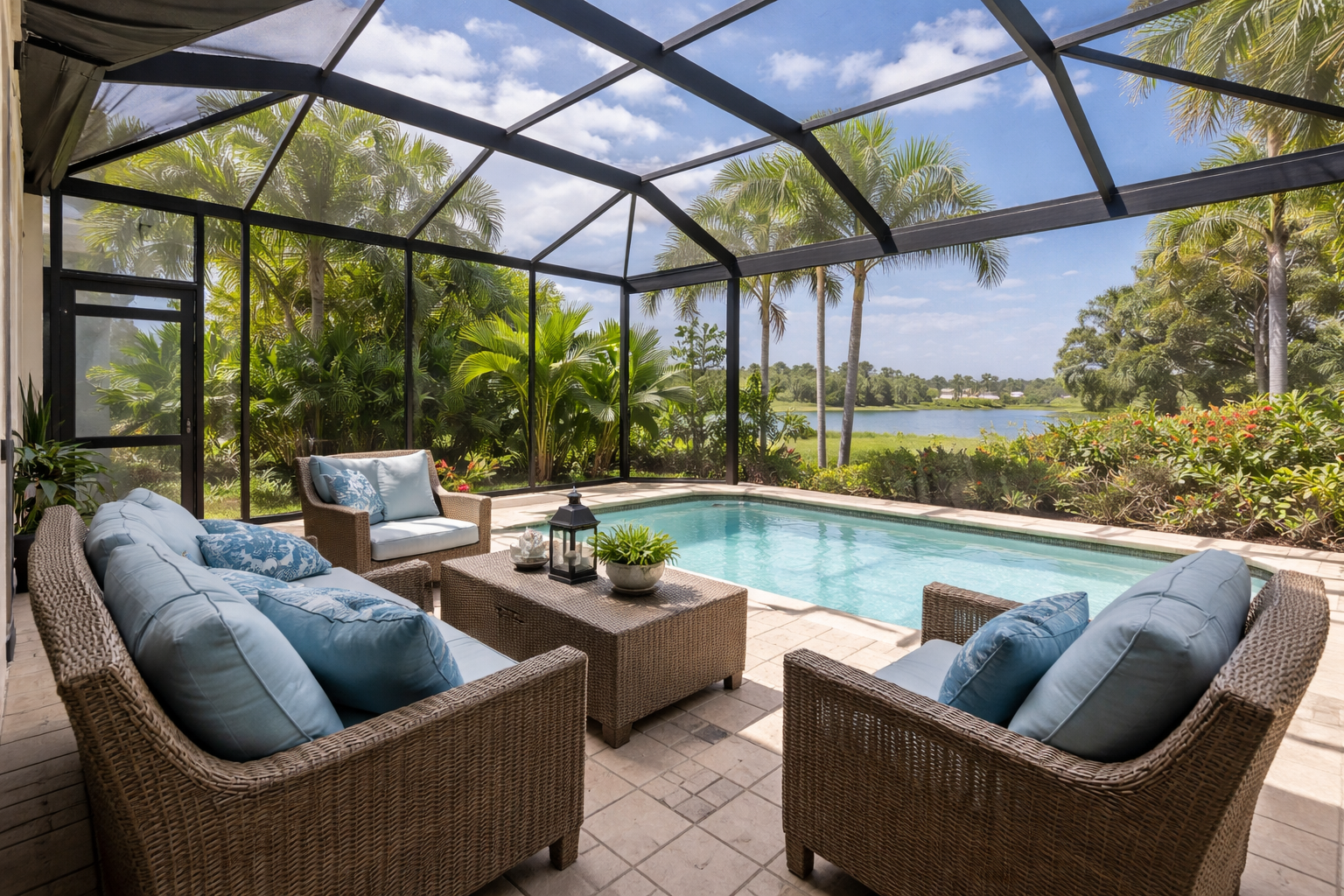
Florida homeowners know one thing for sure—your lanai screen must handle extreme conditions. From blazing sun and heavy rain to high humidity, strong winds, insects, and hurricanes, not all screen materials are built to survive Florida living.
Choosing the best material for lanai screens in Florida is not just about appearance. It’s about durability, airflow, safety, maintenance, and long-term value. The wrong choice can lead to constant repairs, sagging screens, or full replacements after one bad storm.
In this complete guide, we’ll break down:
The most popular lanai screen materials in Florida
Pros and cons of each option
Which material works best for coastal, inland, and high-wind areas
Expert recommendations from Patio Screen Pro
How to choose the right screen for your home and lifestyle
Let’s get started.
Why Choosing the Right Lanai Screen Material Matters in Florida
Florida’s climate is unlike anywhere else in the U.S. Your lanai enclosure faces daily exposure to:
Intense UV rays
Salt air (especially near the coast)
Heavy rain and moisture
Strong winds and hurricanes
Mosquitoes, no-see-ums, and insects
Pets, kids, and outdoor furniture pressure
Because of this, standard screen materials used in other states often fail quickly in Florida. The best lanai screen material should be:
UV-resistant
Rust-proof
Strong yet flexible
Low-maintenance
Code-compliant for Florida homes
This is where professional insight—like that from Patio Screen Pro—makes a big difference.
Fiberglass Lanai Screens: The Most Common Choice in Florida
What Is Fiberglass Screening?
Fiberglass screen is the most widely used material for lanai enclosures in Florida. It’s lightweight, flexible, affordable, and easy to install.
Pros of Fiberglass Lanai Screens
Affordable and budget-friendly
Resistant to rust and corrosion
Provides good airflow and visibility
Easy to replace and repair
UV-coated options available
Cons of Fiberglass Screens
Less durable in high-wind areas
Can tear more easily than metal
Shorter lifespan compared to premium materials
Best Use
Fiberglass screens are ideal for:
Standard residential lanais
Homes in low-to-moderate wind zones
Homeowners seeking a cost-effective solution
Patio Screen Pro often recommends upgraded fiberglass screens with UV protection for homeowners who want affordability without sacrificing too much durability.
Aluminum Lanai Screens: Stronger and More Durable
What Is Aluminum Screening?
Aluminum screens are known for strength and rigidity. They were once the standard in Florida before fiberglass became more popular.
Pros of Aluminum Lanai Screens
Stronger than fiberglass
Resistant to sagging
Long-lasting material
Better for windy conditions
Cons of Aluminum Screens
Can corrode over time in coastal areas
Less flexible
Dents easily
Reduced visibility compared to fiberglass
Best Use
Aluminum screens work well for:
Inland Florida homes
Areas with moderate wind exposure
Homeowners prioritizing strength over flexibility
Professionals like Patio Screen Pro typically recommend aluminum only when corrosion-resistant coatings are used, especially near the coast.
Polyester and Vinyl-Coated Screens: Premium Durability
What Are Vinyl-Coated Polyester Screens?
These screens are reinforced with vinyl or PVC coatings, making them thicker and stronger than fiberglass.
Pros
Excellent durability
Resistant to tears and punctures
Good UV resistance
Longer lifespan
Cons
Higher cost
Slightly reduced airflow
More rigid than fiberglass
Best Use
Perfect for:
Busy households
Homes with children
Moderate storm exposure
This option is often suggested by Patio Screen Pro for homeowners who want added durability without switching to metal screens.
Pet-Resistant Lanai Screens: Ideal for Dog and Cat Owners
What Are Pet Screens?
Pet screens are heavy-duty polyester screens designed to resist clawing, scratching, and pressure from pets.
Pros
Extremely strong and tear-resistant
Ideal for dogs and cats
Long-lasting
Maintains enclosure integrity
Cons
Higher price
Slightly darker appearance
Reduced airflow
Best Use
Recommended for:
Homes with pets
High-traffic lanais
Families wanting peace of mind
Patio Screen Pro frequently installs pet-resistant screens in Florida homes where pets spend time outdoors.
No-See-Um Screens: Best for Insect Control in Florida
What Are No-See-Um Screens?
These screens use a tighter mesh to block tiny insects like no-see-ums and gnats—common pests in Florida.
Pros
Superior insect protection
Ideal for lakeside and coastal homes
Improves outdoor comfort
Cons
Reduced airflow
Slightly less visibility
Requires proper installation
Best Use
Great for:
Waterfront properties
Areas with heavy insect activity
Homeowners sensitive to bites
Patio Screen Pro ensures proper tensioning so airflow remains comfortable even with tighter mesh.
Hurricane-Resistant Screens: Are They Worth It?
What Are Hurricane Screens?
Hurricane screens are reinforced mesh systems designed to withstand strong winds and flying debris.
Pros
Added storm protection
Reduces debris impact
Strong and durable
Cons
Expensive
Not fully hurricane-proof
Requires professional installation
Best Use
Best for:
Coastal Florida homes
High-risk hurricane zones
Homeowners wanting extra protection
While not a replacement for shutters, Patio Screen Pro often recommends hurricane-rated screens as an added layer of defense.
Comparing the Best Lanai Screen Materials in Florida
| Material | Durability | Airflow | Cost | Best For |
|---|---|---|---|---|
| Fiberglass | Medium | High | Low | Budget homes |
| Aluminum | High | Medium | Medium | Windy inland areas |
| Vinyl-Coated | High | Medium | Medium-High | Long-term use |
| Pet Screen | Very High | Medium | High | Homes with pets |
| No-See-Um | Medium | Low-Medium | Medium | Insect control |
| Hurricane Screen | Very High | Medium | High | Storm protection |
Expert Recommendation: What Patio Screen Pro Suggests
After years of experience installing lanai screens across Florida, Patio Screen Pro consistently recommends:
Premium fiberglass screens for most homeowners
Pet-resistant screens for households with animals
No-see-um screens for coastal or lakefront properties
Hurricane-rated screens for high-risk areas
Their team customizes each installation based on location, weather exposure, lifestyle, and budget, ensuring long-term performance.
How to Choose the Best Lanai Screen Material for Your Home
Before deciding, ask yourself:
Do I live near the coast?
Do I experience strong winds or storms?
Do I have pets?
Is insect control a priority?
Do I want low maintenance or maximum durability?
A professional consultation—like the ones offered by Patio Screen Pro—can help you avoid costly mistakes and choose the right material the first time.
Final Thoughts: The Best Lanai Screen Material in Florida
There is no one-size-fits-all answer, but for most Florida homes, high-quality fiberglass or reinforced polyester screens offer the best balance of affordability, airflow, and durability.
If you want expert guidance, professional installation, and materials designed specifically for Florida’s climate, Patio Screen Pro is a trusted name worth considering.
Investing in the right lanai screen material today means fewer repairs, better comfort, and long-term protection for your outdoor living space.


